

bsi. 9001:2015 Certified
Established in 1979
4.7 Star Google Rating
Free Samples Available
Premium UK Supplier
Free Delivery Offer
Established in 1979
4.7 Star Google Rating
Free Samples Available
Premium UK Supplier
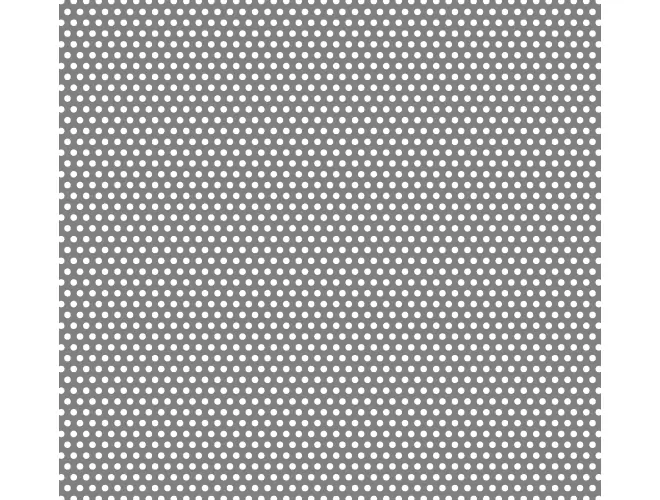
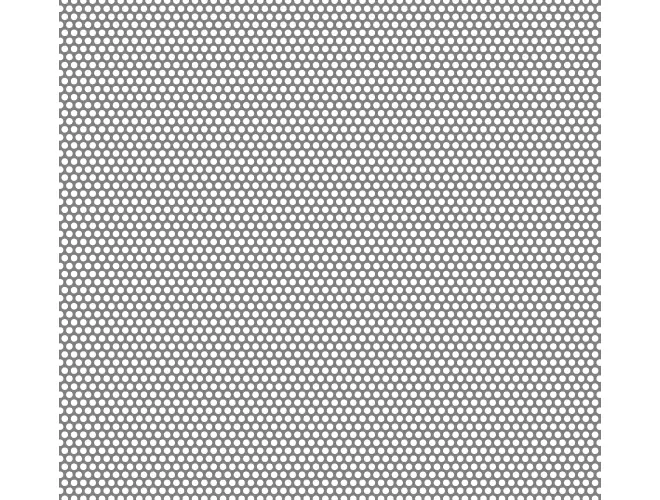
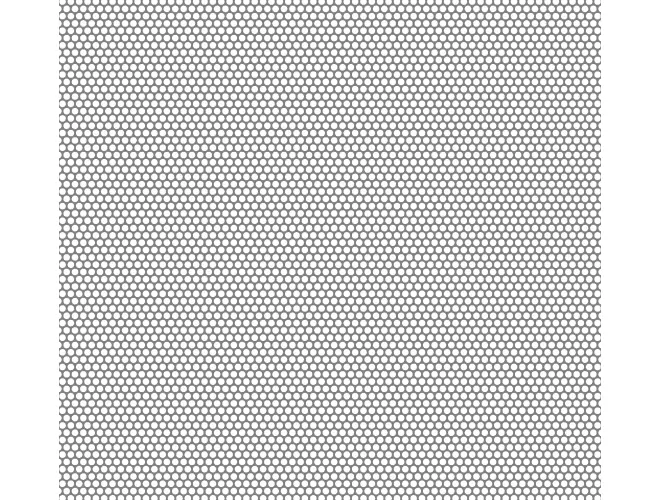
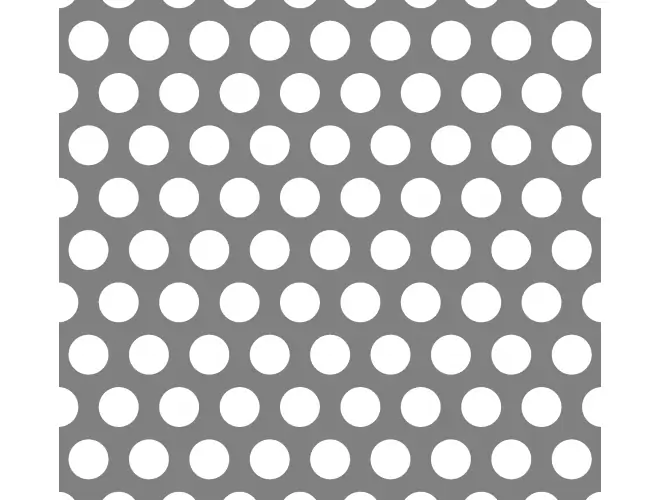
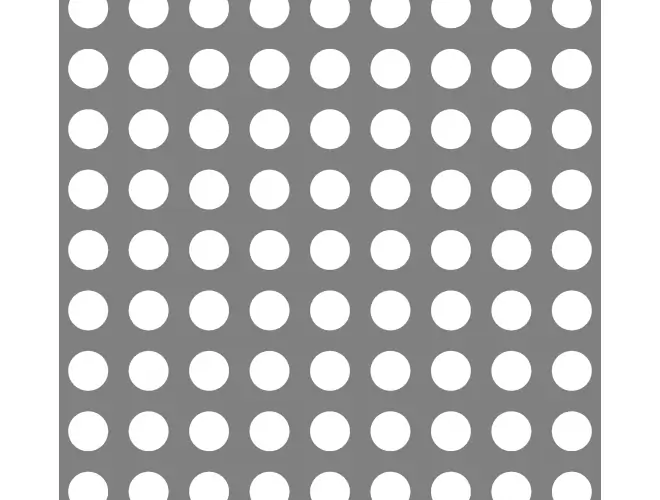
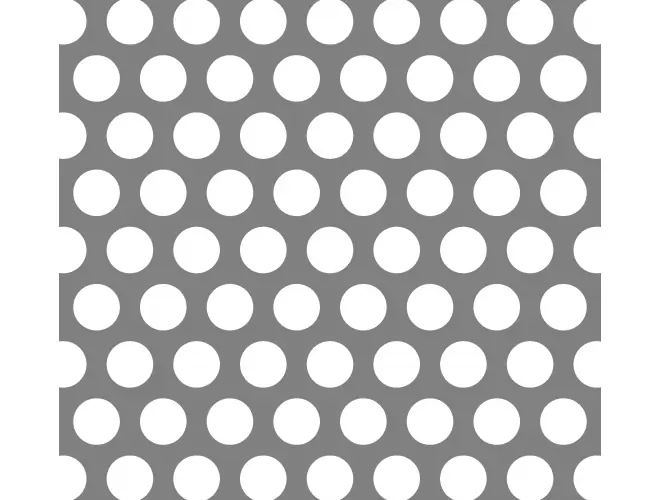
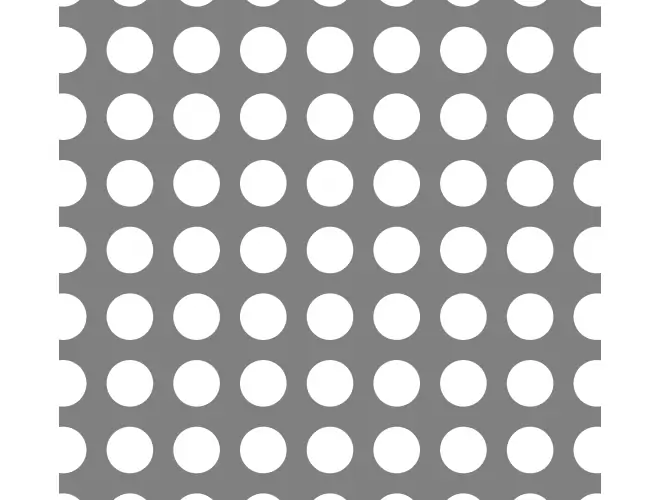
Round hole perforated aluminium sheet from Gooding Aluminium, available in twelve hole diameters from 1.3mm to 40mm across staggered and square pitch layouts. Round-hole perforation is the most widely used pattern in the perforated sheet market — its circular geometry distributes stress evenly around each aperture, produces a clean and neutral visual appearance, and suits the broadest range of functional applications from acoustic absorption and ventilation through to filtration and general-purpose screening. With open areas ranging from 12% to 50% and both pitch orientations available across most hole sizes, this is the largest and most configurable subcategory in the Gooding Aluminium perforated sheet range.
Sheets are normally dispatched within 2–5 working days on an overnight delivery service.
| Perforation Pattern | Round (circular) holes |
| Also Known As | Circular hole perforated sheet, round perforated aluminium, punched aluminium sheet |
| Pitch Layouts | Staggered (triangular/60° offset) and Square (straight rows) |
| Hole Diameters Available | 1.3mm, 1.6mm, 3.0mm, 4.7mm, 6.3mm, 9.5mm, 12.0mm, 15.0mm, 19.0mm, 22.2mm, 31.7mm, 40.0mm |
| Open Area Range | 12% to 50% |
| Sheet Size | 2000mm x 1000mm, 2500mm x 1250mm & Custom sizes |
| Material Thickness | 1.2mm, 2.0mm & 3.0mm (varies by product — check individual listings) |
| Material | Aluminium |
| Surface Finish | Mill (untreated) |
| Dispatch | 2–5 working days |
| Delivery | Overnight nationwide service |
| Custom Options | Bespoke sizing, plain borders, fixing holes, folded edges, anodised and powder coat finishes available — contact sales@goodingalum.com |
Posted on Google Dean Cass175 days ago
Trustindex verifies that the original source of the review is Google.
A unique company in my experience, a wealth of products and the ability to customise, with terrific communications and a fast turn around. Highly recommended on all fronts.Posted on GoogleJessica Hazelton182 days agoExcellent customer service & fast delivery. Very happy with their services.Posted on GoogleMarcus Gundry185 days agoVery helpful staff and great servicePosted on GoogleNigel Clarke205 days agoAlways helpful with my query’s and always supportivePosted on GoogleRichard Brooks224 days agoExcellent customer service, fast delivery and unique products. Been using Gooding for many years and never had an issue.Posted on GoogleAndrew Fletcher275 days agoGooding Aluminium were very helpful and competitive. The PPC trims we required were delivered on time and were of good quality. Our client was very happy with the final result, thankyou.Posted on GoogleBD Bespoke Glazing276 days agoFast service with a very good range of stockPosted on GoogleLeisa Turnbull277 days agoAttentive and timely. Good products as described. Highly recommendPosted on GoogleAlex Wainwright280 days agoThey have a specific product and a general level of service that is unrivalled in our industryPosted on GoogleAnastasia Karkazis434 days agoWith their user-friendly and informative website, I easily ordered four samples of perforated aluminium. The quality overall was remarkable, from the material to the customer service via email and phone. I got exactly what I was looking for, thank you Gooding Aluminium!
Perforated round hole sheets are normally dispatched within 2–5 working days. Delivery is via an overnight nationwide service.
Yes. All sheets in the round hole range can be supplied with a polyester powder coat finish applied after perforation. Finishes are available within a few days of order. Contact sales@goodingalum.com with your colour and finish requirements.
Round hole perforated aluminium sheet is a flat aluminium panel punched with circular apertures arranged in a repeating pattern across the surface. The round hole is the most common perforation geometry because its circular shape distributes mechanical stress evenly around each aperture, avoids sharp internal corners that could initiate cracking, and produces a visually neutral surface that works across a wide range of applications. Gooding Aluminium stocks round hole perforated sheet in twelve diameters from 1.3mm to 40mm.
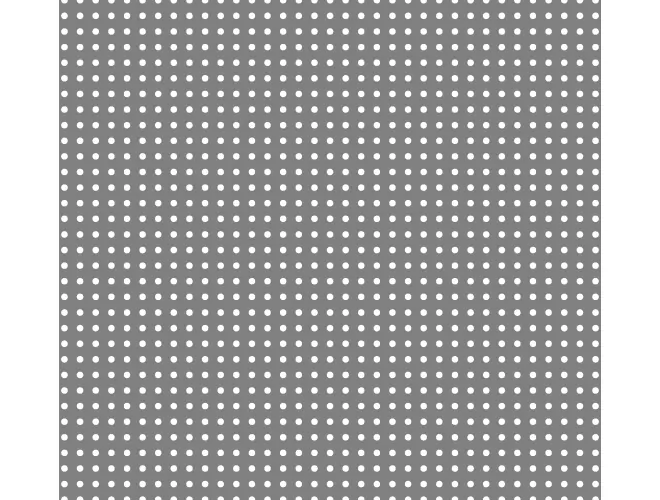
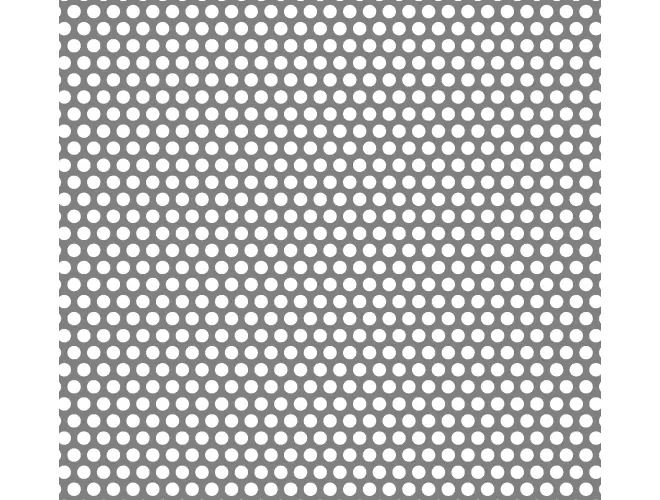
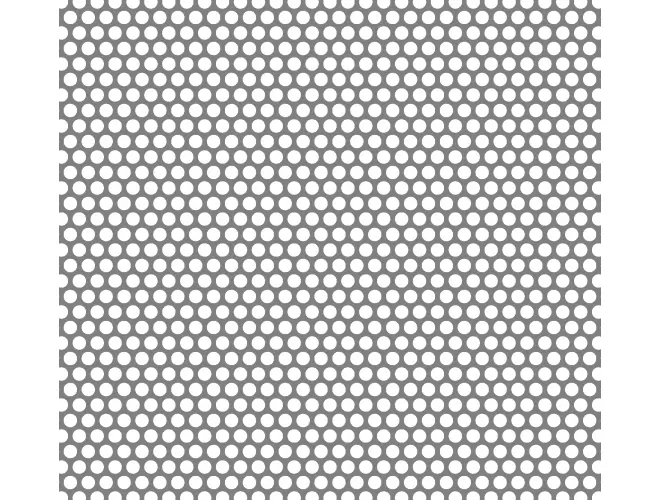
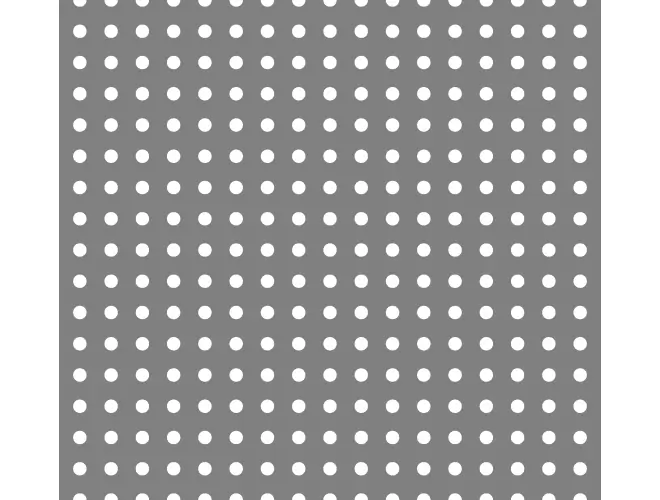
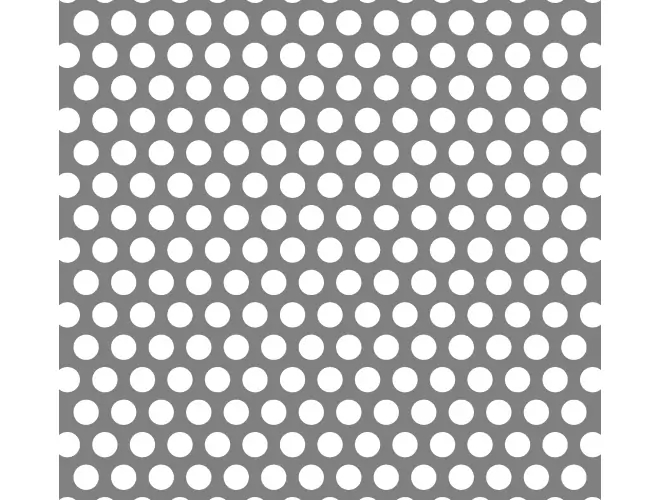
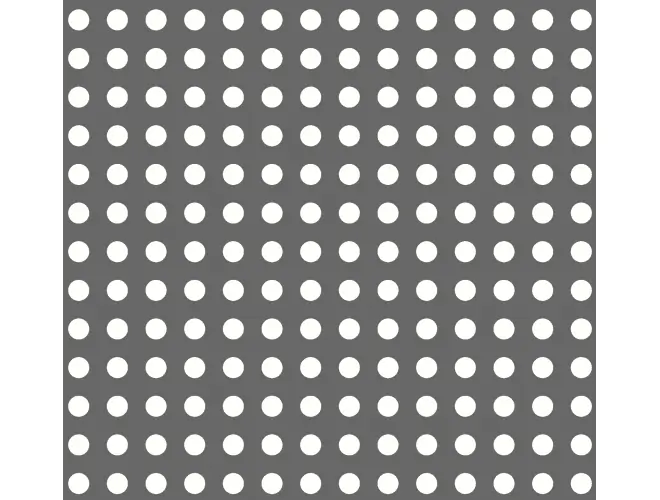
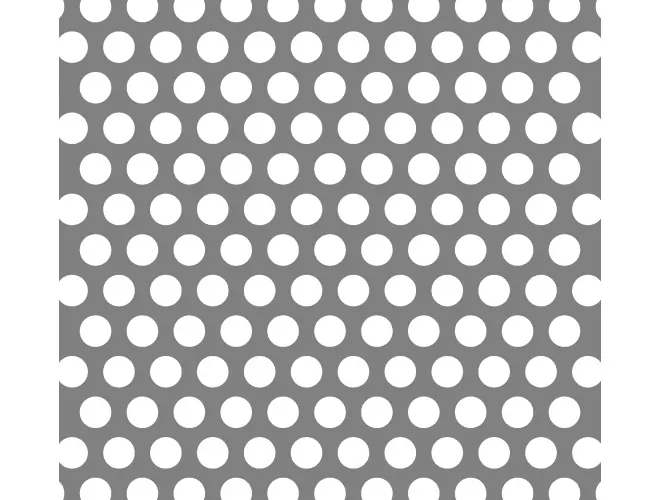
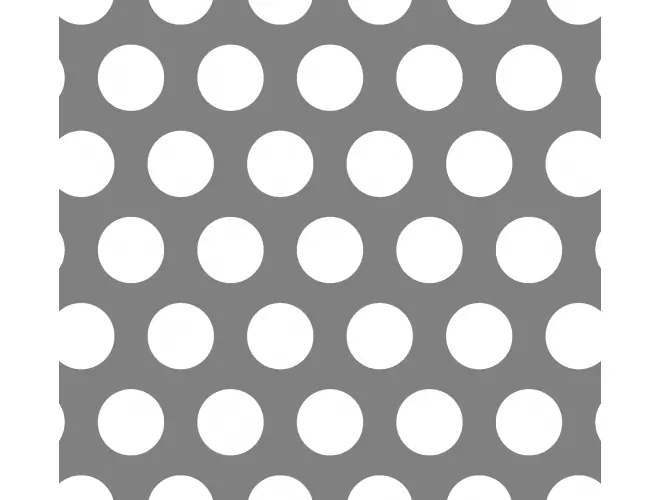
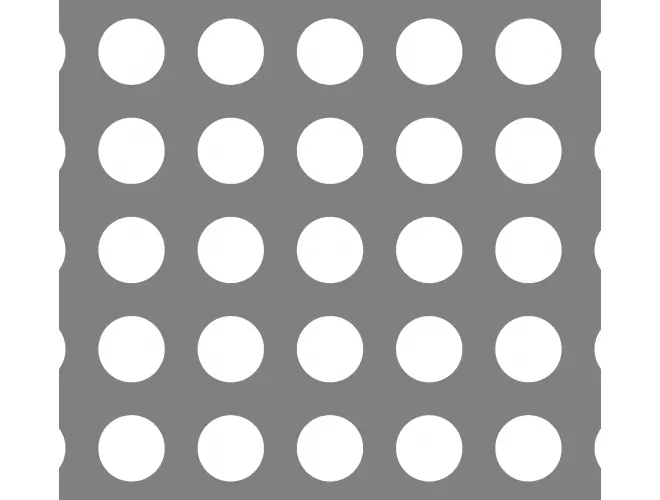
Staggered pitch (also called triangular or 60° offset) positions holes so that each row is offset from the row above and below, with each hole sitting in the gap between two holes in the adjacent row. This produces a higher open area for a given hole size and pitch distance, and distributes material stress more evenly across the sheet. Square pitch aligns holes in straight rows both horizontally and vertically, creating a grid pattern. Square pitch produces a more ordered visual appearance and leaves wider unperforated strips between rows, which can be useful where the sheet needs to be folded or fixed along a straight line.
Twelve diameters are stocked: 1.3mm, 1.6mm, 3.0mm, 4.7mm, 6.3mm, 9.5mm, 12.0mm, 15.0mm, 19.0mm, 22.2mm, 31.7mm, and 40.0mm. Most sizes are available in multiple open area configurations, giving a choice between tighter screening and greater airflow or light transmission at the same hole diameter. Open areas across the range run from 12% at the most opaque end to 50% at the most open.
For acoustic absorption, smaller hole diameters — normally 3mm, 6.3mm & 9.5mm — are most commonly specified. These allow sound energy to pass through the perforations into an absorptive material behind the panel (such as mineral wool or acoustic foam) while maintaining a visually solid surface from normal viewing distances. Open area is the key variable: higher open areas improve absorption at mid and high frequencies, while lower open areas shift the peak absorption towards lower frequencies. The specific choice depends on the frequency profile of the noise source. Please confirm your choice with an acoustic specialist.
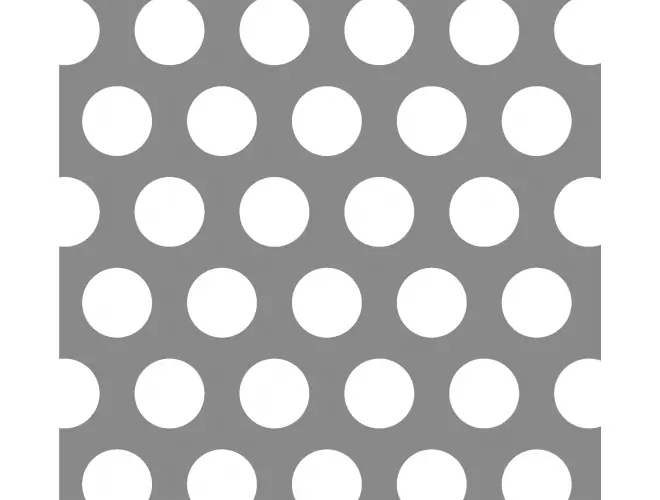
The round-hole range spans a wider selection of diameters than any other perforation pattern in the catalogue. At the fine end, the 1.3mm hole produces a surface that reads as almost solid from a few metres away — the perforations are visible up close but blend into a uniform texture at normal viewing distances. This scale suits acoustic panels, speaker grilles, fine ventilation, and any application where the sheet needs to look like a finished surface rather than a perforated one.
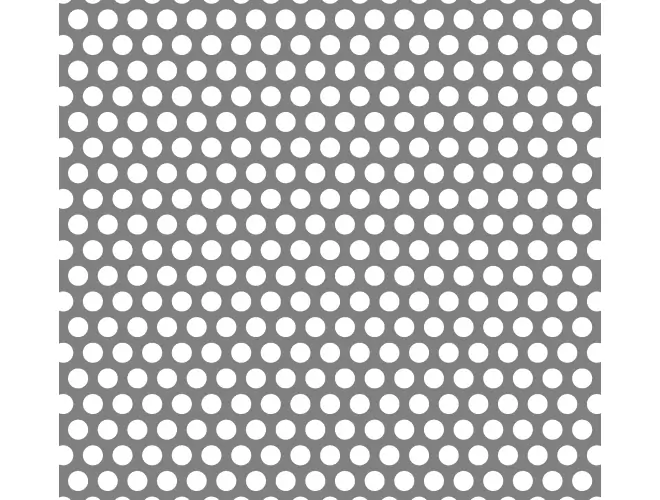
In the mid-range, the 6.3mm to 15mm diameters offer a balance between visual openness and material presence. The individual holes are clearly visible and the pattern becomes a design element in its own right. These sizes are the workhorse of the range — radiator covers, cabinet ventilation, equipment enclosures, balustrade infill panels, and general screening where the perforated pattern needs to be seen but not dominate.
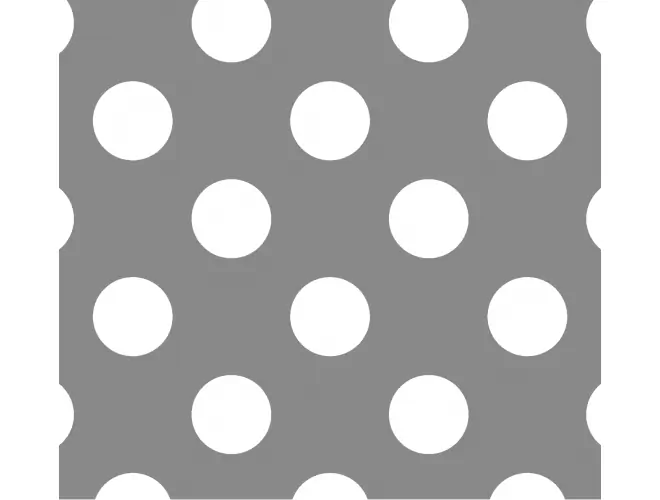
At the large end, the 19mm to 40mm holes produce a boldly perforated surface where the holes are the dominant visual feature. These are suited to external screening, large-format cladding, and applications where maximum airflow or light transmission is needed through a clearly open surface. The 40mm hole at 50% open area is the most open configuration in the entire round-hole range, removing half the sheet’s material while the remaining bridges maintain structural continuity.
The choice between staggered and square pitch is one of the most frequently asked questions in perforated sheet selection, and the answer depends on whether the priority is open area, structural behaviour, visual appearance, or fixing practicality.
Staggered pitch (sometimes called triangular or 60° offset) packs holes more efficiently by offsetting alternate rows. This achieves a higher open area for any given hole diameter and pitch distance, which makes staggered pitch the better choice where ventilation, acoustic transparency, or light transmission needs to be maximised. The offset arrangement also distributes stress more uniformly across the sheet, reducing the likelihood of localised weak lines between rows.
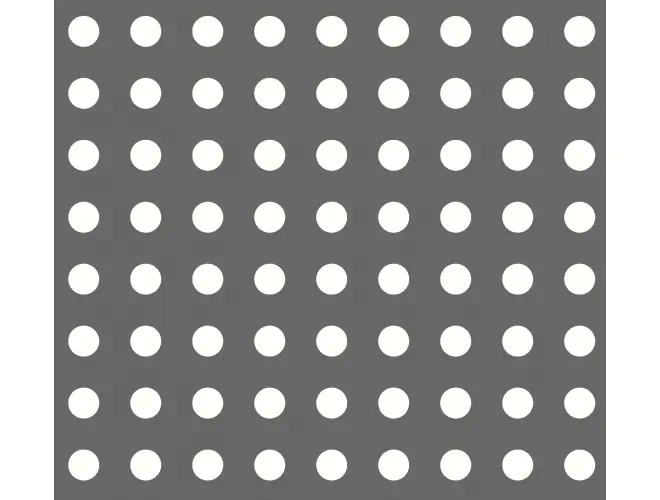
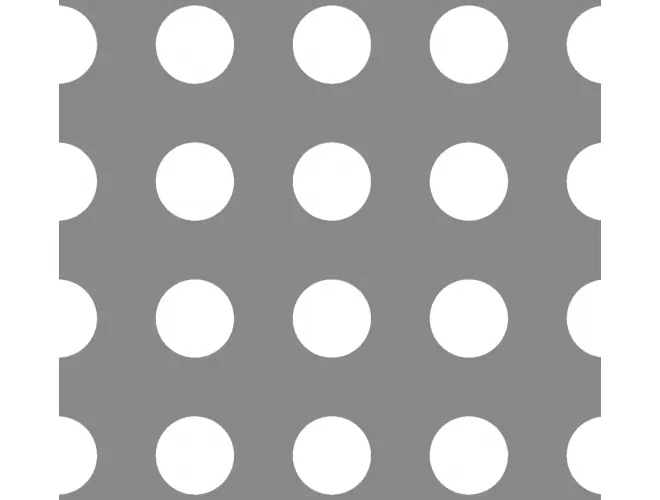
Square pitch aligns holes in straight rows in both directions, creating a clean grid pattern. The open area is lower than staggered pitch at the same hole size and spacing, but the straight rows leave wider continuous strips of solid material between perforation lines. This can be an advantage where the sheet needs to be folded along a line, fixed with a row of fasteners, or cut to a dimension that avoids half-holes at the edge. The grid pattern also produces a more ordered, formal appearance that some specifications prefer for visible panels.
Across the Gooding Aluminium round-hole range, open areas span from 12% (square pitch, small holes, tight spacing) to 50% (staggered pitch, larger holes, wider spacing). This breadth means the right combination of hole size, pitch type, and open area can be selected to match almost any ventilation, screening, or acoustic requirement.
Orders are normally dispatched within 2–5 working days and delivered via an overnight nationwide service. For projects requiring sheets made to non-standard dimensions, supplied with plain border margins, or finished with a polyester powder coat or anodised surface, Gooding Aluminium’s processing and finishing services can accommodate these requirements within a short lead time.
Free material samples are available for all sheets in the round hole range. Samples are posted first class and usually arrive within a couple of days, providing the opportunity to select the most suitable pattern. With twelve hole diameters and multiple open area configurations available, requesting samples of the two or three most likely options is the most reliable way to confirm the right specification for a project.